15 June 2026
Why Nigerian Children Need More Than a Classroom
There are roughly 40 students in the average Nigerian secondary school classroom. One teacher. Forty children. One lesson. Forty different levels of understanding, forty different questions, forty different moments where a child either keeps up or quietly falls behind.
Most of the time, no one notices the ones who fall behind. Not immediately. Not until exam season, when the gap between what a child knows and what they need to know becomes impossible to ignore.
This is not a criticism of Nigerian teachers. Nigerian teachers work extraordinarily hard under extraordinarily difficult conditions. This is simply a reality of scale — and scale has consequences.
When a child does not understand something in class, they have a few options. They can ask the teacher — and risk holding up the lesson for everyone else. They can ask a classmate — who may or may not know the answer. They can go home and ask a parent — who may not remember how to solve a simultaneous equation. Or they can move on and hope it does not matter later.
It almost always matters later. Concepts in mathematics, science, and even English build on each other. A gap at Primary 4 becomes a wall at JSS2. A wall at JSS2 becomes a crisis at WAEC. And by the time the crisis is visible, it has been quietly compounding for years.
Families who can afford it turn to private tutors. And private tutoring works — not because tutors are smarter than teachers, but because of the ratio. One tutor, one child. The child can ask every question they have. The tutor can explain the same thing five different ways until it lands.
But private tutoring in Nigeria costs money most families do not have in consistent supply. It requires scheduling, transportation, and availability. It works around the tutor's calendar, not the child's curiosity. And for Nigerian families in the diaspora — in the UK, Germany, the US, Canada — finding a tutor who understands the NERDC curriculum, knows what WAEC requires, and can explain it in a way that matches what the child's school is teaching is close to impossible.
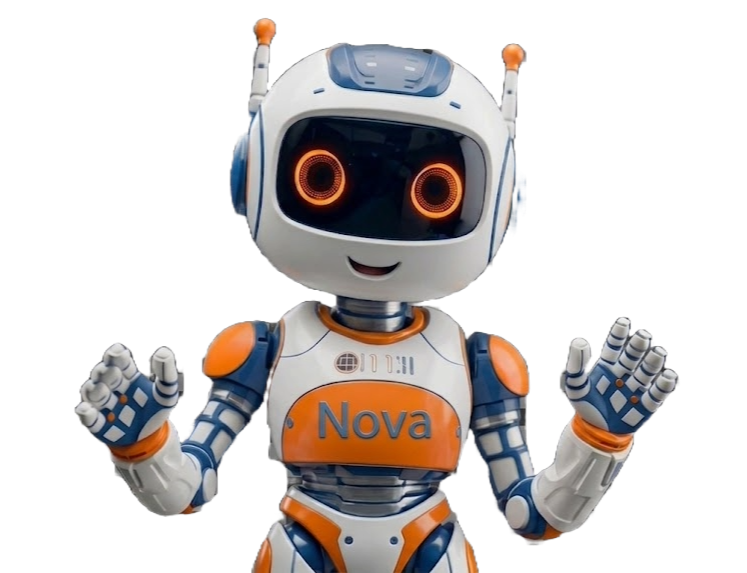
This is the problem Cleva Learning was built to solve. Cleva gives every Nigerian child access to Nova — a personal AI tutor available any time of day, on any device, for as long as they need. Nova covers the full Nigerian curriculum from Primary 1 through SS3, including WAEC and NECO exam preparation across Science, Arts, and Commercial tracks.
Nova does not get tired. Nova does not have forty other students waiting. Nova explains, re-explains, quizzes, encourages, and adapts — by chat or by voice — until your child understands. It is not a replacement for school. It is what happens after school, when the questions are still there but the teacher has gone home.
Cleva was built for the parent who wants to help but cannot always be at the table. For the child who is too shy to raise their hand in class but will happily ask Nova the same question six times. For the SS3 student staring down WAEC with three months to go and gaps they are only just discovering. And for Nigerian families outside Nigeria — for whom curriculum-aligned, exam-specific support has simply never existed in a form they could access.
If your child is in Primary 1 through SS3 and sitting Nigerian exams — or preparing to — Cleva Learning offers a 7-day free trial with no payment required to begin. Create a profile for your child, pick their class and subjects, and introduce them to Nova.
The gap is real. But it is closeable.